
Arrest Warrants in Waterbury
An arrest warrant is judicial process that lets law enforcement take a person into custody, and it exists only after a judge finds probable cause: a reasonable factual basis to believe an offense occurred and that the named person committed it. The judge reviews an application with sworn support under Connecticut law. Keep the warrant itself distinct from an arrest report written after an arrest, and from a docket row that merely tracks a court case. Waterbury has no county sheriff warrant office. Criminal process comes from Connecticut Superior Court, and WPD plus other authorized police agencies execute it. The main criminal and motor-vehicle route runs through Waterbury GA4 at 400 Grand Street. The clerk there can confirm court routing; legal advice should come from your own counsel, not the counter.
Waterbury Probable-Cause Record Path
The OPM arrest-warrant explanation splits court issuance, agency handling, and aggregate reporting into separate lanes. OPM itself issues, enforces, cancels, and changes nothing. A responsible agency receives and serves process. In Waterbury or anywhere else, the court alone controls the underlying judicial record.
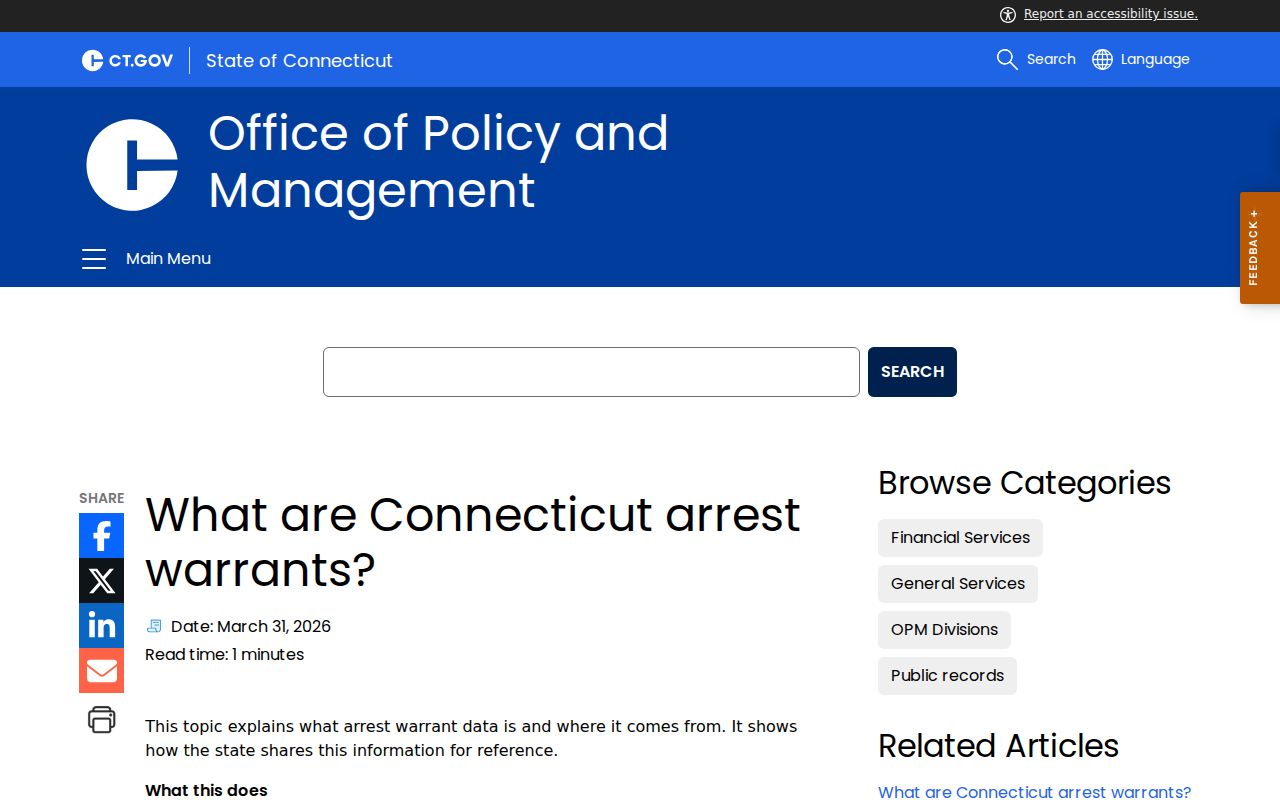
The official page is aggregate and statewide. It is not a Waterbury name roster or a live clearance screen.
What a Waterbury Arrest Warrant Contains
Public sources expose only part of a Waterbury arrest-warrant record. The detailed fields sit in PRAWN, a law-enforcement-only network. If a public record shows a field, read it in context and confirm with the court.
| Category | Arrest, FTA, VOP, OTI, rearrest, or another stated type |
|---|---|
| Issuing court | Waterbury GA4, Waterbury JD, or another assigned Superior Court location |
| Case reference | A docket identifier if public and displayed |
| Responsible agency | The agency assigned to handle or serve process |
| Status dates | Issue, service, return, recall, or as-of date if shown |
| Access status | Whether an affidavit or related record is sealed or restricted |
A Waterbury warrant file's exact fields, numbers, and bond figures come from the court, not from a sample list.
Waterbury Arrest Records Are Not PRAWN
WPD Records sits at 255 East Main Street and lists 203-574-6933 as the city agency's central records route. The division may hold eligible arrest reports, incident material, or agency records, but it is not a public login to PRAWN, and WPD posts no standalone live warrant search. PRAWN's own official description identifies an authorized criminal-justice system holding warrant and responsible-agency information. For the public, the Judicial Branch instead offers a limited VOP/FTA page, which carries a warning that FTA warrants are not displayed until further notice. The pending criminal and motor-vehicle case search is a separate layer again: it can show docket orientation, court location, and case dates, but the Judicial Branch cautions that online data are informational rather than the official record. A pending case does not prove a live warrant, and a missing docket row is not warrant clearance. For current status, bring the exact case reference to the clerk or to counsel. For an eligible police document, describe the record WPD actually holds rather than asking the Records Division to search the statewide warrant network. That division of tasks saves delay and avoids false promises of complete access in Waterbury.
How Waterbury Warrants Are Served
Once issued and entered in authorized systems, a Waterbury arrest warrant may be assigned to WPD or another authorized police agency. Connecticut law also addresses service-attempt notation for specified rearrest and VOP warrants. Judicial Marshals handle courthouse duties. State Marshals serve specified civil process. The U.S. Marshals Service covers federal process and fugitive work, which is a separate jurisdiction entirely. Service does not resolve the underlying charge. It records execution of the process and moves the person into the next stage: arraignment, a bond or release decision, and future dates. Only the court and the responsible agency can confirm the live sequence in a Waterbury case.
Note: Do not approach or detain another person based on a public name match or old record.
Waterbury Arrest and Bench Warrants
The two processes may both result in custody, but the record path differs.
| Process | Typical basis | Key record |
|---|---|---|
| Arrest warrant | Probable cause of an offense | Application, affidavit, and warrant |
| Summons | Order to appear without initial custody | Summons and court docket |
| Bench warrant | Missed court duty or order | Prior order, docket, and warrant entry |
A summons is not a warrant, though skipping a required court event can trigger later process. A bench warrant usually arises inside an existing Waterbury matter. An arrest warrant rests on the required probable-cause showing for an offense.
Waterbury Arrest Report or Warrant File
A record of arrest documents an arrest that already occurred. Connecticut's arrest-record rule identifies categories that may be public, such as the arrestee's name, the arrest time and place, and the offense, subject to exceptions. A Waterbury warrant file is different: it concerns authority sought before service, and its application or affidavit may stay sealed under court rules. That distinction shapes any request. Asking WPD for a releasable arrest report is not the same as asking the Judicial Branch for an arrest-warrant affidavit, and a city FOI request cannot force the court to unseal judicial material. Witness, victim, safety, and active-investigation information may also be protected.
Request Waterbury Agency Records
Use Waterbury GovQA's Public Safety FOI category for a defined WPD record: state a date range, the exact record type, and a preferred electronic format. Ask for segregable non-exempt portions and a written statutory basis for anything withheld. A records request cannot certify statewide live warrant status. The Connecticut FOI access rule shows both the public-record baseline and the investigatory exemptions a Waterbury requester will meet.
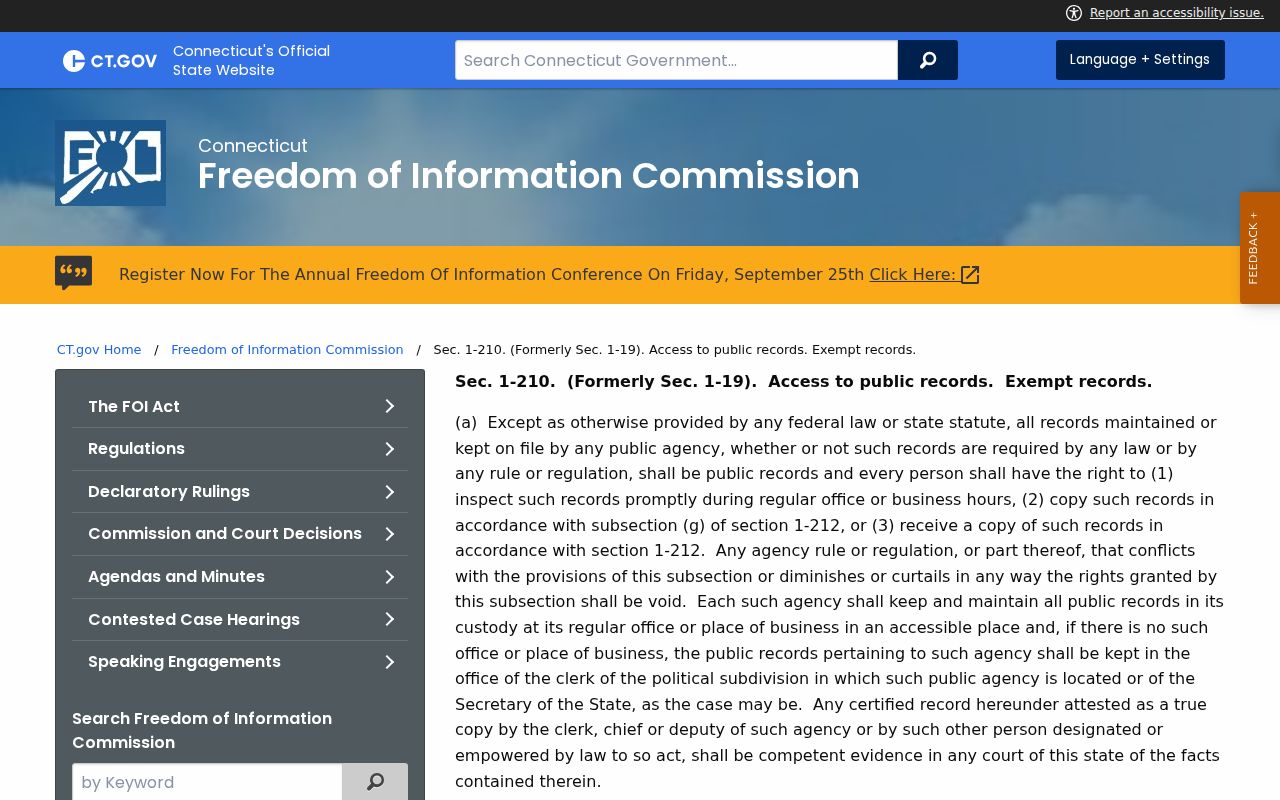
That rule sets the legal access route for Waterbury records. It does not promise sealed or protected warrant material will be released.
Waterbury Warrant Data Has Limits
Statewide numbers help, but only up to a point. The Judicial Branch counts FTA, VOP, and OTI cases, and OPM puts out aggregate arrest-warrant reports. Those totals describe the system, not any one person, and address-of-record rules and reporting periods can shift them. Waterbury itself publishes no count of active arrest warrants. For category definitions, the state warrant statistics page from the Judicial Branch spells out what each label covers.
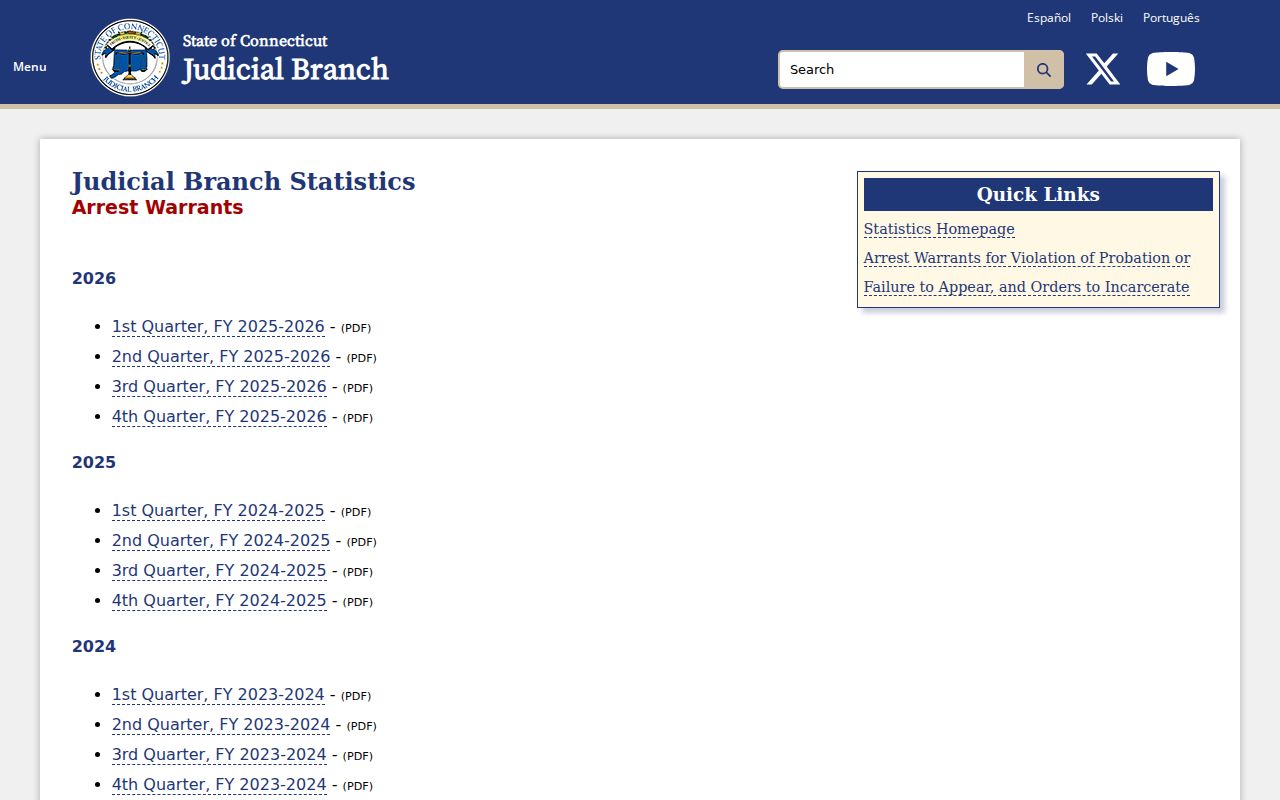
Treat the quarterly reports as context, never as a Waterbury warrant list. They cannot tell you whether any single record is still active.
Handle a Waterbury Arrest Warrant
Think an arrest warrant carries your name? Call before you walk in. A blank web search proves nothing, and Waterbury posts no bond schedule, bond portal, surrender form, or same-day recall process. Release terms, bond amounts, and next steps all turn on the case and the court handling it, so get instructions first.
- Gather the court location and docket reference without sharing them publicly.
- Consult a Connecticut criminal-defense lawyer when possible.
- Call Waterbury GA4 at 203-236-8100 for current court routing.
- Ask counsel or the responsible authority about a planned surrender and release terms.
- Keep court papers and confirm the next date and current warrant status.
Act carefully: A warrant can authorize custody; obtain case-specific legal and court instructions before appearing in person.
The Waterbury warrant record overview lays out how the clerk, WPD, and statewide public interfaces each fit. Start there before you act. Posting bond does not end the case. Cash, surety, personal recognizance, or a no-bond condition applies only when the Waterbury court orders it, and each works differently. A cash bond follows the court's instructions. A surety deal runs through its own contract. Personal recognizance releases you with no cash deposit, when allowed, and no-bond means you cannot post your way out at that stage. Ask which one applies before sending anyone money. After a surrender or court date, confirm more than your release. Get the next appearance date, ask whether the warrant was served or recalled, and check which office updates the record. Served means the process was executed, not that the criminal case closed, while recalled means the issuing court withdrew it, though Waterbury systems may lag before showing that change.